The Serengeti is compelling long before a river crossing begins. A lion resting on a granite kopje, a line of giraffes moving through woodland and a morning spent following the same cheetah can become the defining memories of a safari. The scale is extraordinary, but the rewarding moments often come from slowing down within one small part of it.
In northern Tanzania, Serengeti National Park protects part of a much wider ecosystem. Wildlife movements connect the park with neighbouring protected landscapes, including the Ngorongoro Conservation Area to the south and Kenya’s Maasai Mara to the north. A boundary on a map does not mark the end of the wildlife story.
That distinction matters when planning. The experience in central Seronera can differ markedly from the northern river country or the southern short-grass plains. Choose a region for your travel dates and interests, then leave enough time to explore it. Trying to cover every sector in a short visit can turn precious safari time into transfers.
WILDLIFE & LANDSCAPES
Look beyond the migration.
The moving herds are one part of a much broader wildlife experience. Resident animals and different habitats give the Serengeti interest even when the main migration concentrations are elsewhere.
01
Predators & patient observation
Lions, leopards and cheetahs are important reasons to visit, but each requires time and a little luck. Watching an animal rest, scan or interact can be more absorbing than driving from one reported sighting to the next. Tell your guide if photography or animal behaviour matters more to you than a long species list.
02
Plains, woodland & river life
Wildebeest, zebra and gazelles share the landscape with giraffes, elephants, buffalo and many other animals. Open grassland, woodland and river corridors offer different viewing opportunities. Varying the habitat you explore can be more useful than simply travelling farther.
03
Birdlife & the smaller details
Birds, insects and the shapes of the landscape deserve attention alongside the large mammals. Keep binoculars within reach and allow your guide to explain what you are seeing. Sightings vary by area and conditions; a Big Five checklist should never become a guarantee.
WHERE TO EXPLORE
One ecosystem. Different experiences.
These are planning areas rather than interchangeable overnight stops. The right combination depends on the season, the number of nights available and how much time you want to spend moving between sectors.
Central Serengeti & Seronera
A versatile starting point
The central area brings together grassland, woodland, river valleys and kopjes. It is a useful foundation for a first Serengeti safari and for travellers interested in resident wildlife rather than a single seasonal event. Seronera also serves as an important air-access point.
Northern Serengeti & Kogatende
River country and seasonal herd movements
The northern landscape includes the Mara River area and the Kogatende access point. Travellers often focus on this region when the migration is in the north, but its appeal also lies in the river corridors, rolling country and time spent observing wildlife away from a single crossing point.
Western Corridor & Grumeti
A different landscape within the park
The Western Corridor follows the park westward into Grumeti river country. Woodland and river habitat give it a character distinct from the broad southern plains. Herd movements can make it particularly relevant during the migration’s passage through the west.
Southern Serengeti & Ndutu
Short-grass plains and the calving-season focus
The wider southern ecosystem is associated with the herds’ gathering and calving season. Ndutu forms part of the adjoining Ngorongoro Conservation Area, rather than being simply another sector within Serengeti National Park. This matters for routing and entry arrangements.
WAYS TO EXPERIENCE IT
Make time for what interests you.
Game drives form the core of most Serengeti visits. Other experiences can add a different perspective, but they need to be confirmed for the specific operating area and travel dates.
Unhurried game drives
Build in time to stay with an interesting sighting. Early starts can be rewarding, while a full-day drive may suit a particular area or objective. Discuss the pace, picnic arrangements and driving distances in advance rather than assuming every safari day follows the same pattern.
Wildlife photography
A successful photographic visit starts with priorities: big cats, birds, herd behaviour or wider landscapes. Tell us about your equipment and how you prefer to work. Waiting for light and behaviour needs time, and vehicle arrangements should be confirmed in your quotation.
Hot-air balloon flights
A sunrise balloon flight offers an aerial perspective on the landscape. It is an optional activity, subject to the operator’s location, weather and availability. Confirm participation requirements, transfers and the additional cost before treating it as part of the itinerary.
Guided walking, where available
A walk can shift attention toward tracks, plants and smaller details. It is not a standard inclusion everywhere in the Serengeti. The location, permits, qualified guiding arrangements and conditions must be confirmed before it is offered as part of your trip.
WHEN TO VISIT
The right season for your safari.
There is no single best month for every Serengeti safari. Use these broad seasonal patterns to start a conversation, then choose a region around your interests. Rainfall and herd movements vary from year to year.
Seasonal guidance describes typical patterns. It is not a live migration report or a promise of particular sightings.
January–MarchSouthern plains and new life
The southern short-grass plains and the Ndutu area are often a focus as the herds gather and the calving period develops. Conditions can be green, with predator activity attracting particular interest. Calving is a natural process rather than a scheduled event, and its timing and location vary.
Consider when planning: Consider this period if your priority is the southern ecosystem, newborn animals or photography in greener landscapes. Confirm the intended game-drive areas rather than assuming every Serengeti base is close to the calving plains.
April–JuneChanging landscapes and the journey north
The wetter part of this period can bring lush scenery and more demanding road conditions. As the seasonal pattern changes, herd concentrations can become dispersed and move through central and western parts of the ecosystem. One fixed location may not suit the whole period.
Consider when planning: Ask how the route responds to road access and seasonal movements. Leave flexibility in the pace and confirm the operating arrangements for your dates. A quiet-looking calendar is not, by itself, a reason to promise lower prices or empty parks.
July–OctoberNorthern river country and dry-season interest
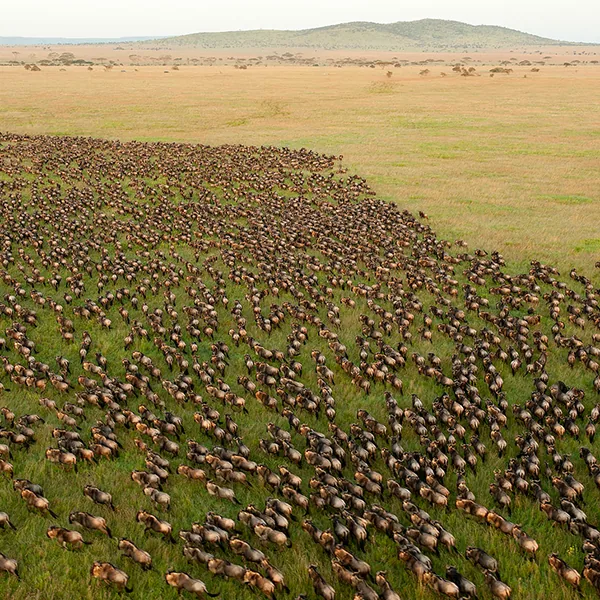
The north is often a focus when herds reach the Mara River area. Central and other parts of the Serengeti continue to offer wildlife experiences beyond the migration. Popular river locations can be busy; a safari planned only around waiting at a crossing may miss other rewarding encounters.
Consider when planning: If crossings are your main interest, give the northern region several nights and realistic expectations. A river crossing cannot be booked for a particular day, and the presence of herds does not mean they will cross while you watch.
November–DecemberA transition toward the southern plains
Returning rains can refresh the landscape as the herds move through the ecosystem toward southern grazing areas. This is a transition rather than a precise handover between two locations, with animals potentially spread across several areas.
Consider when planning: Discuss whether central Serengeti, the southern plains or a combination makes the most sense for your exact dates. Do not build a short stay around an assumed migration position months in advance.
GETTING THERE
Plan the arrival around the experience.
Choose the arrival plan together with the region you want to explore. Reaching the Serengeti is only part of the journey: the distance from the gate or airstrip to your wildlife area also matters.
01
By road from Arusha and the northern circuit
An overland journey can connect Arusha, Tarangire, the Lake Manyara area and Ngorongoro with the Serengeti. It gives the safari a sense of progression, but travelling into the park takes a substantial part of a day. Gate formalities, road conditions, stops and the final destination all affect the timing. A transfer with game viewing is still a transfer; do not count it automatically as a full day exploring your chosen sector.
02
By light aircraft
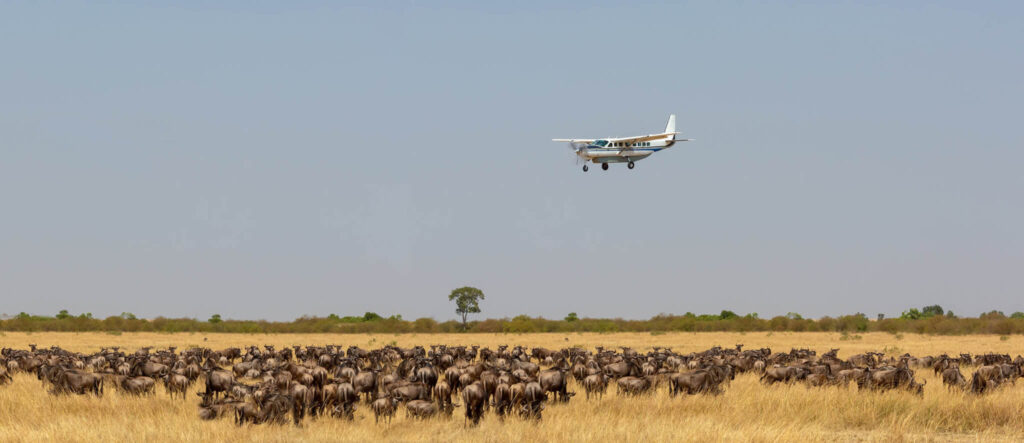
Flying can be a practical way to reach a distant sector or use a shorter holiday well. Seronera serves central Serengeti, while other airstrips serve different regions. Match the airstrip to the actual route rather than selecting a flight labelled only “Serengeti”. Services can involve intermediate stops, and the onward transfer remains part of the plan.
03
Connections and baggage
International arrivals commonly connect through the Arusha and Kilimanjaro area. A same-day onward flight should be checked against actual schedules and a sensible connection margin. Small-aircraft baggage rules vary by operator; confirm the allowance, bag type and any arrangements for camera equipment before packing.
HOW LONG TO SPEND
Count wildlife days, not just nights.
These are planning suggestions, not fixed packages. Arrival time, departure arrangements and the distance between regions change how much time you actually have on safari.
2 nights
A focused introduction
Best treated as a visit to one region, particularly if flying reduces transfer time. Expect limited flexibility if wildlife is far away or an arrival is delayed.
3–4 nights
Our planning suggestion for a first visit
More room for full wildlife days, repeated exploration and a less hurried pace. Keep the focus on one region, or discuss a carefully chosen second area when the logistics work.
5 nights or more
A deeper Serengeti journey
Consider two complementary areas, a stronger photographic focus or more time in the migration region. Extra nights are most useful when they improve the experience rather than add frequent relocations.
CONNECT THE JOURNEY
What works well with the Serengeti?
Ngorongoro Conservation Area
Combine Serengeti plains with crater and highland scenery. Allow for the connecting drive and confirm the time allocated to the crater separately from wider conservation-area travel.
Add baobab landscapes and a different wildlife setting to a northern Tanzania circuit. Include genuine game-viewing time rather than using the park only as a brief stop between long drives.
Follow the safari with coastal time. Check the actual flight and transfer arrangements before fixing the final safari day; the right connection depends on the Serengeti sector and operating schedule.
Can I see wildlife when the migration is elsewhere?
Yes. Resident wildlife is a central reason to visit the Serengeti. Choose the habitats and region around your interests rather than judging the entire park only by the position of the migrating herds. Individual sightings still depend on conditions and luck.
Is Ndutu inside Serengeti National Park?
Ndutu is in the adjoining Ngorongoro Conservation Area and belongs to the wider Serengeti ecosystem. It is often described as part of a southern Serengeti safari, but its administration and access arrangements should be distinguished from the national park.
Can I fit the Serengeti into a safari of five days or fewer?
It can be included, but the starting point, transport and chosen sector are decisive. A short fly-in visit may leave more wildlife time than a long return road journey. Concentrate on fewer areas and compare the number of full game-viewing days, not only the package length.
Can you guarantee a Mara River crossing?
No. Neither the date nor the duration of a crossing can be guaranteed. Plan several nights in the appropriate region, remain flexible and enjoy the wider wildlife experience as well as any time spent near the river.
Should I visit central and northern Serengeti on the same trip?
That can be rewarding when the season and length of stay justify both. In a short itinerary, moving between distant sectors can reduce your time with wildlife. Compare the transfer requirements and consider flying into one area if the routing and budget allow.
Are balloon flights and walking safaris included?
Only when explicitly listed and confirmed in your quotation. They depend on the area, operating arrangements, permits or participation requirements, and conditions. Game drives should not be taken to include these additional activities.
What determines the price of a Serengeti safari?
Travel dates, number of nights, party size, transport, park charges and the activities selected all affect the quotation. A listed itinerary price is a starting point on its stated basis; the final arrangements and inclusions must be confirmed for your dates.
YOUR NEXT CHAPTER
Tell us where you want to go.
Share your dates, interests and who is travelling. We will help you shape the next steps.